Key Takeaways
- ENERGY STAR-certified windows cut heating and cooling bills by up to 13% versus non-certified windows (ENERGY STAR).
- Colorado sits in the ENERGY STAR Northern climate zone, where the number that matters most is a low U-factor — aim for 0.30 or lower, and 0.22 or lower for top cold-weather performance.
- Low-E coatings are non-negotiable here — they cut heat loss in winter and block the high-altitude UV that fades floors and furniture under Colorado’s intense sun.
- Triple-pane isn’t automatically worth it in Denver. It adds about a third to the price (roughly 35% more); a quality double-pane Low-E window with a good install often wins on payback outside the coldest mountain microclimates.
- The federal window tax credit expired after 2025 — verify current federal and Colorado utility rebates before you buy.
Colorado asks more of a window than almost anywhere in the country: subzero winter nights, intense high-altitude sun, and daily temperature swings that can top 40°F. “Energy-efficient” gets stamped on nearly every replacement window sold — but only a few specs actually decide whether your home stays comfortable and your bills stay low here. This guide breaks down exactly what to look for in 2026, what it costs, and where to spend (and not spend) for Colorado’s climate.
What makes a window energy-efficient in Colorado?
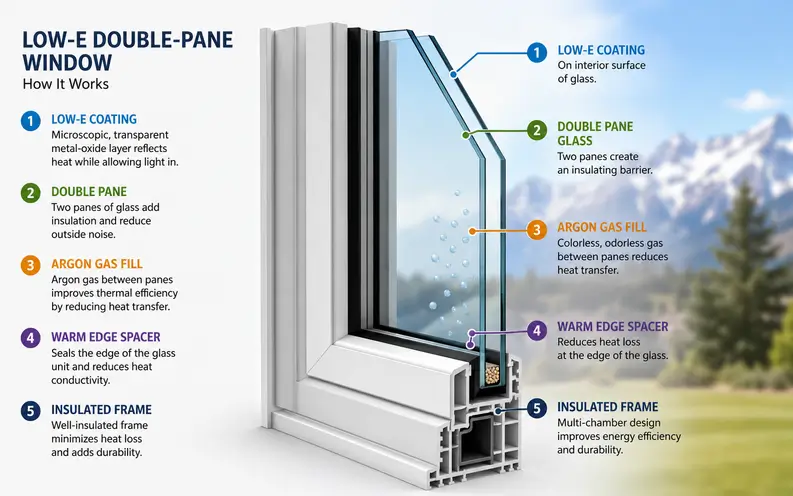
In Colorado, an energy-efficient window is defined mostly by two numbers: a low U-factor and the right Solar Heat Gain Coefficient (SHGC). The U-factor measures how much heat escapes — lower is better, and it’s the single most important spec for our cold winters. SHGC measures how much solar heat the glass lets in. ENERGY STAR certification bundles these into climate-zone requirements, so a window certified for Colorado already meets a baseline for our conditions.
ENERGY STAR is explicit that windows “must meet U-Factor and, where applicable, Solar Heat Gain Coefficient (SHGC) requirements based on climate zone” (ENERGY STAR). The payoff is real: certified windows lower heating and cooling bills by up to 13% compared with non-certified products. Beyond the glass, air leakage around the frame and a proper install determine whether you actually keep that efficiency.
What U-factor do you need for Colorado’s climate?
Colorado falls in the ENERGY STAR Northern climate zone, where you should look for a U-factor of 0.30 or lower — and 0.22 or lower for the best cold-weather performance. U-factor typically ranges from about 0.20 (excellent) to 1.20 (a bare single pane). The lower the number, the less heat your home loses on a January night, which is exactly the problem Colorado winters create.
Here’s how common glazing types stack up:
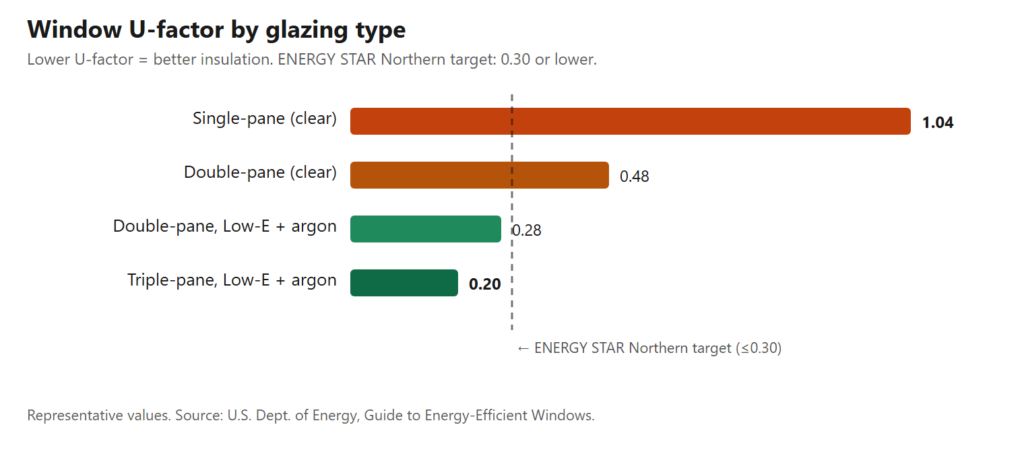
A bare double-pane window doesn’t cut it here — it’s the Low-E coating and gas fill that push the number down into the range Colorado needs.
Double-pane vs. triple-pane: is triple worth it in Colorado?
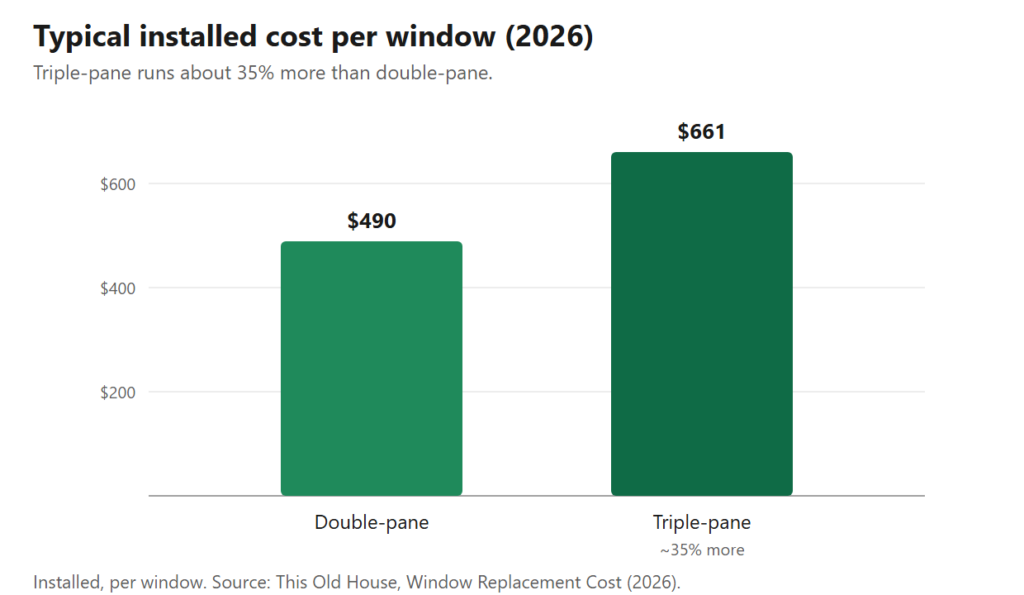
For most Front Range homes, a quality double-pane Low-E window is the value sweet spot; triple-pane makes the most sense in the coldest mountain microclimates or for north-facing, high-wind walls. Triple-pane adds a third glass layer and another gas-filled gap, dropping the U-factor further — but it also adds about 35% to the price (This Old House), and the extra energy savings are modest in Denver’s climate compared with, say, Minnesota or Maine.
When triple-pane does pay off: mountain towns and high-elevation builds, rooms that never feel warm, big north- or west-facing glass, and noise reduction near busy roads. For a typical Denver-metro home, spend first on Low-E, argon, a good frame, and an airtight install.
Low-E coatings, gas fills, and frames — what to prioritize
After U-factor, prioritize a Low-E coating, an argon (or krypton) gas fill, and a stable frame material. Low-E (low-emissivity) coatings are microscopically thin metallic layers that reflect heat back inside in winter and block UV year-round — critical under Colorado’s intense sun. Argon between the panes slows heat transfer; krypton performs slightly better in thinner triple-pane gaps.
Frame materials matter too:
- Vinyl — best value, good insulation, low maintenance; the most common Front Range choice.
- Fiberglass — stronger and more stable across big temperature swings, at a higher price.
- Composite — fiberglass-like performance with a premium look.
- Wood-clad — beautiful and well-insulated, but needs more upkeep and costs the most.
Why Colorado’s sun and altitude change the math
Colorado’s high-altitude UV and wide daily temperature swings make Low-E coatings and SHGC tuning more important here than in most states. At altitude there’s less atmosphere to filter ultraviolet light, so unprotected interiors fade faster — a Low-E coating is your cheapest defense. The same big day-to-night temperature swings that crack driveways also stress window seals, so seal quality and a professional install directly affect how long your efficiency lasts.
SHGC is a balancing act on the Front Range: you want enough winter solar gain to help heat the home, but not so much that summer afternoons overheat west-facing rooms. A good installer will tune glass packages by orientation rather than putting the identical window on every wall.
How much do energy-efficient windows cost in Colorado?
Energy-efficient replacement windows average about $490 per window installed for double-pane and $661 for triple-pane — roughly 35% more (This Old House). For a home with 5–25 windows, a full replacement project runs about $2,385–$11,925, with larger homes going higher. Price varies with window count, size, and frame material. For a full breakdown by window type, see our companion guide on window replacement cost in Denver.
If your current windows are drafty single- or old double-panes, the upgrade also fixes comfort problems — see why your windows feel drafty for the underlying causes.
Rebates and tax credits in 2026
The federal Energy Efficient Home Improvement Credit — 30% of cost, up to $600/year for windows — was available through the end of 2025, so confirm current federal and Colorado utility programs before you buy. ENERGY STAR notes those §25C credits applied to ENERGY STAR Most Efficient windows “through the end of 2025” (ENERGY STAR). Colorado utilities such as Xcel Energy have historically offered efficiency rebates, and those change year to year, so check what’s active for your utility and address before scheduling work.
Frequently asked questions
Are triple-pane windows worth it in Colorado?
For most Front Range homes, a quality double-pane Low-E window is the better value; triple-pane makes the most sense in cold mountain microclimates, for large north-facing glass, or where noise reduction matters. Triple-pane adds about 35% to the cost for modest extra savings in Denver’s climate.
What U-factor is best for Colorado’s climate?
Colorado is in the ENERGY STAR Northern climate zone. Look for a U-factor of 0.30 or lower, and 0.22 or lower for the best cold-weather performance. Lower U-factor means less heat lost on cold nights.
Do new windows qualify for a tax credit in 2026?
The federal §25C window credit (30% of cost, up to $600/year for ENERGY STAR Most Efficient windows) was available through the end of 2025 per ENERGY STAR. Verify current federal rules and your local utility’s rebates before purchasing.
What’s the best window frame material for Colorado?
Vinyl offers the best value and solid insulation for most homes. Fiberglass and composite handle Colorado’s big temperature swings with more stability at a higher price; wood-clad looks best but needs the most maintenance.
Will energy-efficient windows stop fading from the sun?
Low-E coatings block a large share of the UV that fades floors, rugs, and furniture, which matters under Colorado’s high-altitude sun. They reduce fading substantially but don’t eliminate it entirely.
The bottom line
For Colorado’s climate, the window specs that matter most are a low U-factor (0.30 or lower), a Low-E coating, and an argon fill — in a well-installed frame. Triple-pane is a comfort upgrade worth considering in the coldest microclimates, but most Front Range homes get the best return from quality double-pane Low-E windows. If you’d like an expert to match glass packages to your home’s orientation and exposure, The Install Company installs energy-efficient windows and entry doors across Denver and the Front Range.
Sources
- ENERGY STAR — Residential Windows, Doors & Skylights — retrieved 2026-07-10
- ENERGY STAR — Federal Tax Credits (Energy Efficient Home Improvement Credit) — retrieved 2026-07-10
- U.S. Department of Energy — Guide to Energy-Efficient Windows — retrieved 2026-07-10
- This Old House — Window Replacement Cost (2026) — retrieved 2026-07-10