A wide folding glass wall can climb past $20,000 installed, while even a modest system starts around $5,000 (HomeGuide, 2026). That’s a big spread. It’s also why choosing the right type of big glass door matters so much before you spend a dollar.
This guide walks through every large glass door system we install across Denver and the Front Range. You’ll see how each type works, what it costs in 2026, and which one holds up best in Colorado’s sun, cold, and snow.
Key Takeaways
- Large glass doors cost roughly $800–$2,000+ per linear foot installed, or about $5,000–$20,000 for a typical opening (HomeGuide, 2026).
- Multi-slide doors give the widest unbroken glass; bifold doors open the most space; lift & slide seals tightest against Colorado cold.
- Triple-pane glass and thermal-break frames aren’t optional at altitude, they’re what keep a big door from becoming a big draft.
- The right pick depends on your view, your wall width, and how often you’ll actually open it.
What Counts as a “Big” Glass Door?
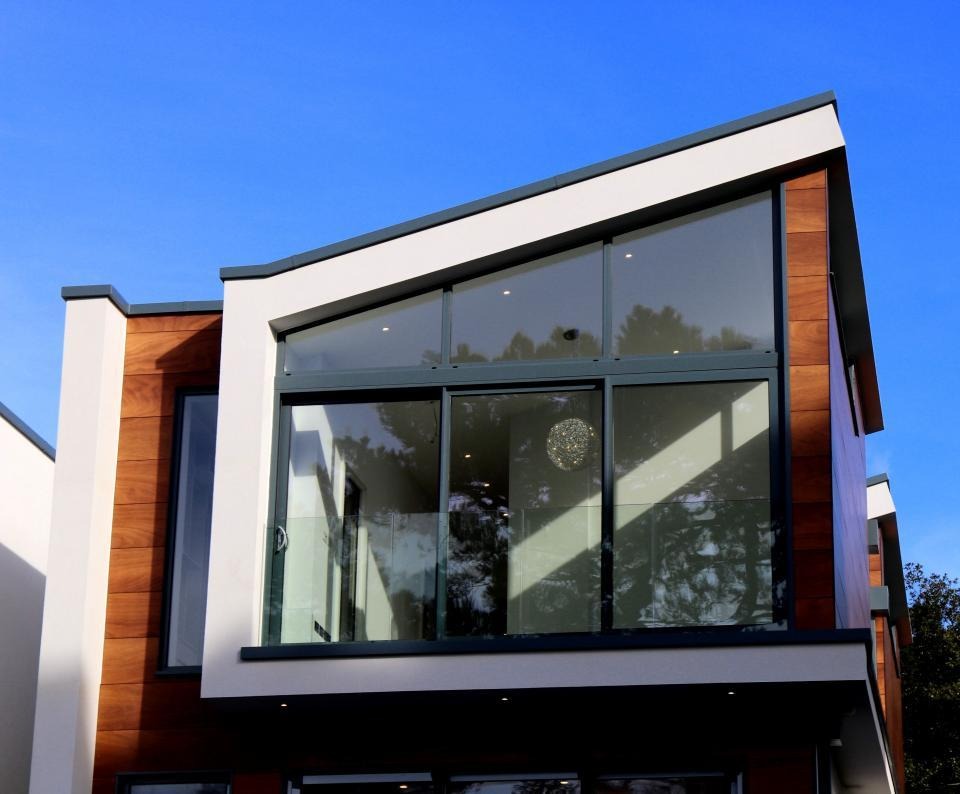
Folding and sliding glass walls commonly range from about 6 feet to 18-plus feet wide, which is what separates them from a standard patio slider (Angi, 2026). A big glass door isn’t just a door. It’s a movable wall that turns a solid exterior into an open one.
These systems share a few traits. They use large glass panels set in slim aluminum or clad frames. They run on tracks or pivots. And they’re built to disappear, stacking, folding, or sliding away so the opening feels open between inside and out.
For Colorado homes, that open feel comes with a catch: the same wall has to seal tight when winter hits. We’ll come back to that.
What Are the Main Types of Large Glass Doors?
Most big-door projects fall into one of seven systems, and each opens differently. Below is the quick map. Each one links to a deeper page with sizing, glass options, and installation detail.
| Door type | How it opens | Best for |
|---|---|---|
| Multi-slide | Panels slide and stack behind each other | Wide views, big openings |
| Bifold | Panels fold like an accordion | Opening the entire wall |
| Lift & slide | Panel lifts off its seal, then glides | Tight sealing, heavy panels |
| Panels slide fully into the wall | A truly invisible opening | |
| Pivot | Door rotates on a center hinge | Dramatic entries |
| Bi-parting | Panels split and slide both ways | Centered, symmetrical openings |
| Curved / 90° zero-post | Slides around a corner, no post | Corner walls with open views |
Not sure which fits your space? Our glass door installation team sizes systems to the wall, not the other way around.
How Much Do Big Glass Doors Cost in 2026?
Big glass doors cost roughly $800 to $2,000+ per linear foot installed, and a typical bifold or folding system runs about $5,000 to $20,000 for a 6-to-10-foot opening (HomeGuide, 2026). A modest opening sits near the bottom. A wide, custom wall sits near the top.
By width, Angi’s 2026 materials pricing climbs steadily — from about $4,700–$7,800 for an 8-foot folding door up to $13,200–$13,500 for an 18-foot system (Angi, 2026). Frameless multi-slide systems sit at the higher end of the per-foot range. Width drives the price more than almost anything else.
[Chart: Midpoints of materials-only ranges. Source: Angi (2026)] (chart graphic included in the assets folder)
Want the line-item version for sliders specifically? Our 2026 sliding glass door cost guide breaks down materials, labor, and glass upgrades.
Which Glass Door Is Best for Colorado’s Climate?
In Colorado, the best big glass door is the one with triple-pane glass and a thermal-break frame, because altitude and cold punish anything less. Double and triple-pane glass cost more upfront but insulate far better than single-pane — which matters more here than almost anywhere. On the Front Range, that gap shows up on your heating bill.
Here’s what we’ve learned installing these doors for decades. At 5,000-plus feet, the temperature swing between a sunny afternoon and a January night is brutal on seals and frames. A door that performs fine in a mild climate can frost up and leak air here. The fix isn’t a fancier brand, it’s the right glass package, a proper thermal break, and a clean, square install.
Why does sealing matter so much on a big door? Because the bigger the opening, the more wall you’ve replaced with glass. Get it wrong and you’ve built a beautiful hole in your insulation. If you’ve felt cold air pour off an existing slider, our guide on why sliding doors let in cold air explains the usual culprits, and the fixes.
Our take: For most Front Range homes that want a tight seal, a lift & slide system is hard to beat. The panel physically lifts off its weatherstrip to move, then drops back down to compress the seal. Closed, it’s one of the tightest large doors you can buy.
Bifold vs. Multi-Slide: Which Should You Choose?
Choose a bifold if you want the whole wall to vanish, and a multi-slide if you want the widest sheet of uninterrupted glass. Bifold panels fold flat against the side. Multi-slide panels stack behind each other or tuck into a pocket. Both open big, they just open differently.
Bifolds win when the goal is a fully open, no-barrier connection to a patio. Multi-slides win when the view matters more than the opening, since their panels are wider and the sightlines stay cleaner when closed. One thing most national guides miss: in a windy spot, a multi-slide is often easier to live with, because you can crack one panel without unfolding an entire accordion.
We compare these two head-to-head, with Denver pricing, in bifold vs. multi-slide glass doors.
Can Big Glass Doors Be Automated?
Yes — large glass doors can run on motorized systems that open at the push of a button or a sensor, and demand for them is climbing in both homes and commercial spaces. Automation suits heavy panels, accessibility needs, and high-traffic entries where manual operation gets old fast.
Motorized big doors shine where panels are large enough to be a chore by hand. They also help anyone who needs hands-free, low-effort access. We cover the options on our glass door automation page, including sensors, remotes, and safety stops.
Why Does Professional Installation Matter So Much?
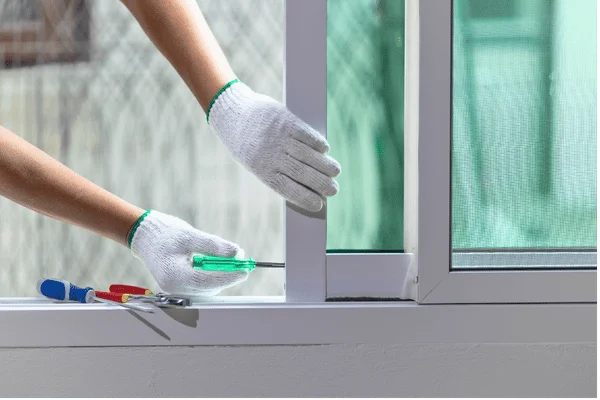
A big glass door is only as good as its installation, because a system this large amplifies every mistake. A frame that’s out of square by a fraction binds the panels, breaks the seal, and voids the warranty. The glass is the easy part. The opening is where it’s won or lost.
Three things separate a clean install from a callback. The rough opening has to be dead square and properly flashed. The threshold has to drain and seal against snowmelt. And the panels have to be set so they glide without dragging. We’ve been called to “fix” doors that were never going to work because the opening was wrong from the start. As an ICC Class C licensed contractor, we set these systems to the manufacturer’s spec — which is also what keeps the warranty intact.
How Do You Plan a Big Glass Door Project?
Start with three numbers: your rough opening width, your budget band, and your lead time. Most large door systems are made to order, so they don’t sit on a shelf. Planning early keeps your project on schedule instead of waiting on glass.
Walk the wall first. Measure the opening and note what’s above it, since a header may need sizing for the span. Pick your configuration based on how you’ll actually use the space — daily flow, seasonal opening, or mostly-closed-for-the-view. Then choose your glass package for Colorado’s climate. When you’re ready, call (720) 548-2786 and we’ll size it on-site.
Frequently Asked Questions
How much does a big glass door cost in Denver?
Large glass doors cost roughly $800–$2,000+ per linear foot installed, with typical bifold and folding systems running $5,000 to $20,000 in 2026 depending on width, glass, and type (HomeGuide, 2026). Width and glass package drive most of the price.
What’s the difference between a bifold and a multi-slide door?
Bifold panels fold like an accordion and stack to the side, opening the entire wall. Multi-slide panels slide and stack behind each other, giving wider, cleaner glass when closed. Bifolds maximize the opening; multi-slides maximize the view.
Are big glass doors a problem in cold Colorado winters?
Not if they’re built right. Triple-pane glass and thermal-break frames insulate far better than single-pane in cold climates. A correct install and a proper seal matter as much as the glass itself at Colorado altitude, where the daily temperature swing is hard on any opening.
Which big glass door seals the tightest?
Lift & slide systems are among the tightest-sealing large doors. The panel lifts off its weatherstrip to move, then lowers to compress the seal when closed. That makes them a strong pick for the Front Range, where winter air infiltration is a real concern.
How long does a custom glass door take to install?
Most large systems are made to order, so the lead time is in manufacturing, not installation. The on-site install itself is usually a day or two once the door arrives. Plan several weeks from order to install, and order early in the season.
The Bottom Line
Big glass doors transform a Colorado home — but only the right system, with the right glass, installed the right way. Match the door to your view and your wall. Spec the glass for the cold. And insist on a square, sealed install.
If you’re weighing options, start with the door-type table above, then dig into the specific system that fits. When you want a real number for your space, call (720) 548-2786 or request a free quote online. We’ve been installing big doors across Denver and the Front Range for over 35 years — we’ll help you get it right the first time.
Sources
- HomeGuide, “How Much Do Bifold Doors Cost? (2026),” retrieved 2026-06-22, https://homeguide.com/costs/bifold-doors-cost
- Angi, “How Much Does It Cost to Install Folding Patio Doors? [2026 Data],” retrieved 2026-06-22, https://www.angi.com/articles/folding-patio-doors-cost.htm