Both materials can shade a Denver patio for years. Aluminum does it with less work from you, while wood holds up as long as its stain or sealer is kept up. Below, Mark Palitto, owner of The Install Company, walks through how the two compare under Colorado weather, what each asks of you once it is built, and how to match one to your house and budget.
Key Takeaways
- Judge a cover by its frame: from across the yard the two can look alike, so ask what the posts and beams are made of.
- Expect sun to wear on wood and hail to wear on aluminum. Under heavy snow, the framing is what gets tested on either one.
- Put wood recoating on your calendar, sooner for a south-facing cover, while an aluminum cover mostly asks for a wash.
How do aluminum and wood patio covers differ in look and build?
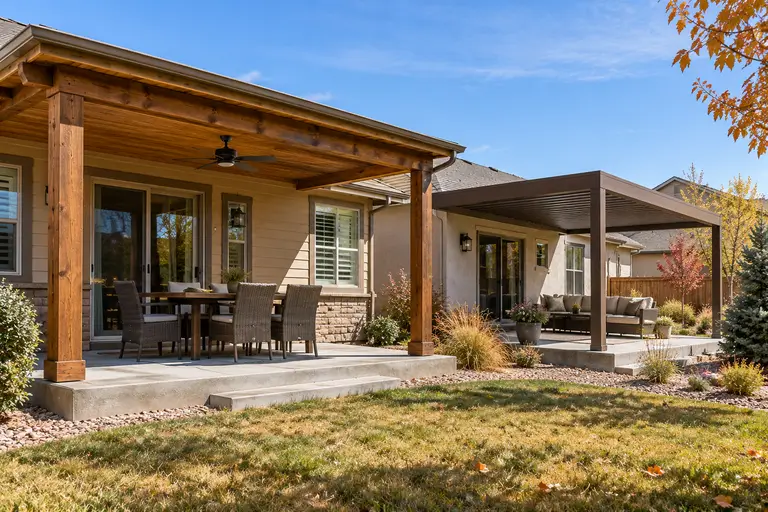
A wood cover and an aluminum one can look alike from across the yard. The difference is in what the frame is made of and how it goes together. Wood is cut and fastened on site from lumber posts and beams, so the shape can follow the lines of your house and the finish can be any stain or paint you choose. Aluminum covers such as Alumawood use factory-made extruded members finished to look like wood, bolted together in set profiles. The roof can be an open lattice of shade bars (the Laguna style is one) or solid panels.
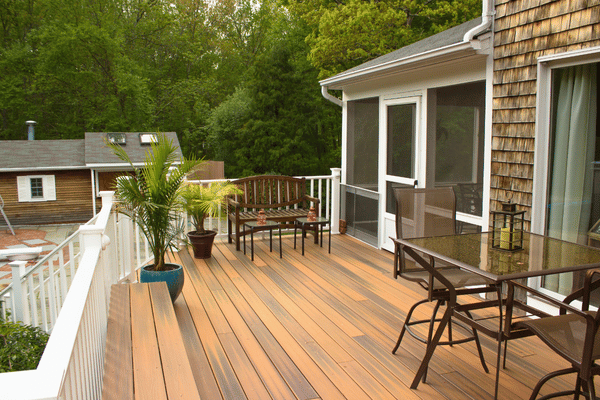
Material is one choice among several in a patio cover, next to its size and roof style. If the cover will sit over a deck, the composite vs wood deck comparison weighs the same wood trade-off in Colorado weather. These deck and pergola ideas show how a cover fits the rest of the yard.
How each material handles strong sun, hail and heavy snow
Sun is harder on wood, and hail is harder on aluminum. Heavy snow tests how either cover was framed. Unprotected lumber grays and opens small checks along the grain under strong sun, while an aluminum member’s factory finish holds its color longer. Hail reverses that. A hard storm can dent shade bars or solid aluminum panels, and the dent stays, while wood takes a dimple that blends into the grain. How much snow a cover carries depends on its span and beam size. Open lattice lets some snow fall through, but solid panels hold all of it.
What upkeep do wood and aluminum covers need: staining, sealing, cleaning?
Wood needs a fresh coat of stain or sealer on a recurring schedule. Aluminum mostly needs a wash. How often wood wants recoating depends on how much direct sun and moisture the cover takes, so a south-facing cover comes due sooner. Before each coat, check post bases and beam tops, where water sits, and replace any soft wood. On the aluminum side, HomeGuide’s Alumawood cost guide says the material resists rot, warping and insect damage, and that its Aluma-Shield paint system with a Teflon surface protector repels dirt and stains, so it never needs painting. A hose and mild soap handle pollen and dust. Skip abrasive pads, which can scratch the finish.
Which material suits your house and the way you use your patio?
Let your house’s trim and your patio habits decide. A cover that echoes the house looks built in, not added on.
| If your patio | Lean toward | Why |
|---|---|---|
| Hosts dinners you want to keep dry | Aluminum, solid panels | A solid roof sheds rain off the table |
| Holds a grill | Aluminum, open lattice | Metal framing does not burn, but keep the clearances to combustibles that the grill maker and local fire code set |
| Meets a house with stained wood trim | Wood | It takes the same stain as the trim |
| Fronts a modern house with metal accents | Aluminum | Its factory finish suits clean lines |
What goes into planning the build: attachment, permits and an installer?
Before you choose attachment or material, ask your local building department whether the cover needs a permit and what snow and wind loads the design must carry. Denver residents apply for building permits, including for patio covers, through the City and County of Denver’s ePermit portal. Then look at how the cover meets the house. An attached cover hangs one side on a ledger board bolted into the house framing, and that joint needs flashing to keep water out of the wall. A freestanding cover stands on its own posts.
What drives the cost of an aluminum or wood patio cover?
The published ranges below are for Alumawood, an aluminum cover, priced per square foot installed; each one prices a different job. Nationally, HomeGuide’s Alumawood cost guide puts an Alumawood cover at $18 to $55 per square foot installed on average, and its Laguna lattice style at $18 to $22. A pacificpavers.com comparison of Alumawood and wood covers says the initial investment for Alumawood is often higher than for a traditional wood cover. Alumawoodfactorydirect.net lists $20 to $22 per square foot, installation included, for an attached genuine Alumawood cover with a 200 square foot minimum, and it does not state a region.
Your own number moves with size, since a bigger cover takes more material and labor. Whether the cover attaches to the house or stands free shifts it too, as does the roof design. On a wood build, the lumber you pick adds to the price. The Denver patio cover installation cost guide covers pricing for a Denver budget in more detail. For a quote on your own patio cover, contact The Install Company or call 720-764-6264.
Sources
- B221 Standard Specification for Aluminum and Aluminum-Alloy Extruded Bars, Rods, Wire, ASTM International, retrieved 2026-10-18.
- Alumawood Patio Covers Reviews: Pros and Cons – Pacific Pavers, pacificpavers.com, retrieved 2026-10-18.
- How much does an Alumawood Patio Cover Cost? – Alumawood Factory Direct Patio Covers, alumawoodfactorydirect.net, retrieved 2026-10-18.
- How Much Does an Alumawood Patio Cover Cost? (2026), homeguide.com, retrieved 2026-10-18.