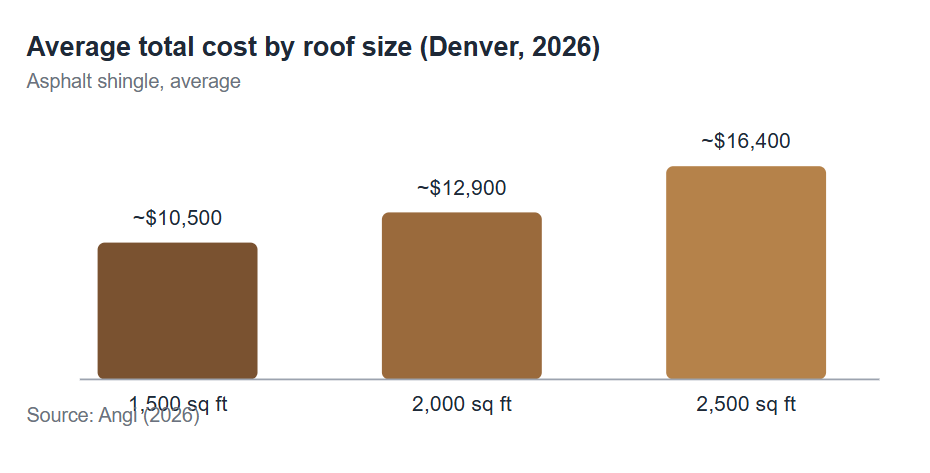
Most Denver homeowners replacing a roof in 2026 spend between $10,500 and $16,400 for a typical 1,500-to-2,500-square-foot roof, with a 2,000-square-foot roof averaging about $12,900 (Angi, 2026). On a bigger or steeper roof, the bill runs higher. Hail makes Colorado one of the toughest roofing markets in the country, so what you pay — and what you should pay extra for — looks different here than almost anywhere else.
This guide breaks down real 2026 numbers: cost by roof size, cost by material, what hail-rated shingles offer, and how insurance fits in.
Key Takeaways
- A new asphalt roof in Denver runs about $4–$6 per square foot installed — and $4–$11 across all roofing materials (Angi, 2026).
- A typical replacement averages about $12,900 for a 2,000-square-foot roof, rising with size and pitch.
- Impact-resistant (Class 4) shingles cost more than standard asphalt but resist hail and may lower your insurance premium.
- Budget extra for snow guards, ventilation, and the high-altitude details Colorado roofs need.
How Much Does a New Roof Cost in Denver in 2026?
A new asphalt shingle roof in Denver costs $4 to $6 per square foot installed, and $4 to $11 across all roofing materials (Angi, 2026). For a typical home, that puts most replacements between $10,500 (1,500 sq ft) and $16,400 (2,500 sq ft), with a 2,000-square-foot roof averaging about $12,900. A separate 2026 estimate put the Denver average near $17,500 for a larger 2,490-square-foot roof (InstantRoofer, 2026).
Roof size is the headline number. Roofers price in “squares”, one square equals 100 square feet, so a 2,000-square-foot roof is 20 squares. The bigger the roof, the more material and labor, and the higher the total.
What Drives Roof Replacement Cost?
Beyond size, four factors move your roofing bill the most: pitch, material, the number of old layers to tear off, and the condition of the decking underneath. A steep roof costs more to walk and work on. Multiple old layers mean a bigger tear-off. And rotten decking has to be replaced before new shingles go on.
Access matters too. A tall, complex roof with lots of valleys, chimneys, and skylights takes longer and costs more than a simple gable. None of this shows up in a quick phone quote, which is why an on-site inspection beats a ballpark every time.
For a look at how different materials stack up, see our comparison of metal roofs vs. asphalt shingles.

How Do Roofing Materials Compare on Cost?
Asphalt shingles are the budget-friendly default at $4–$6 per square foot, while metal runs $7–$11 per square foot and tile or slate costs more still (Angi, 2026). Most Denver homes use asphalt because it balances cost, hail performance, and easy repair.
Material choice is a long game. A cheaper roof that needs replacing sooner can cost more over 30 years than a pricier one that lasts. In Colorado’s hail belt, though, longevity isn’t only about the material, it’s about impact rating, because a premium roof that shatters in a storm isn’t a bargain. That’s why we steer most homeowners toward impact-resistant options.
Curious which materials Denver homeowners actually pick and why? Our guide to the most popular types of roofing covers the trade-offs.
Are Impact-Resistant (Hail) Shingles Worth the Cost?
Class 4 impact-resistant shingles cost more than standard asphalt, but in a hail-prone metro like Denver, the upgrade often pays for itself. The shingles resist the strikes that crack and bruise standard products, and many Colorado insurers offer a premium discount for impact-rated roofs.
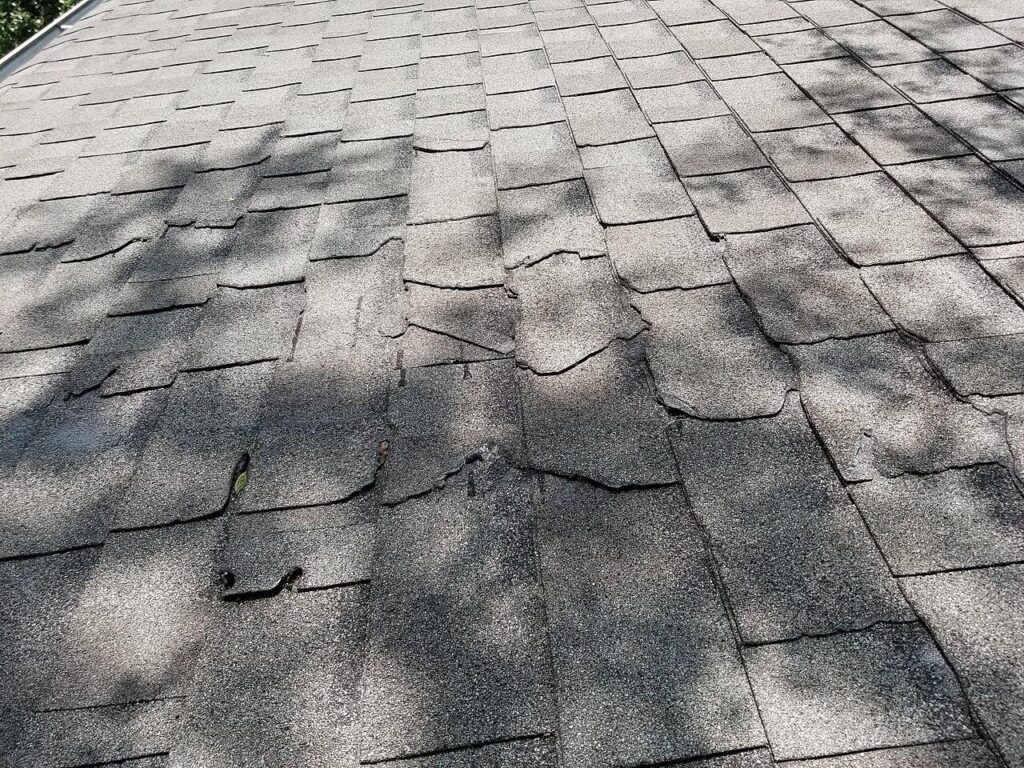
Here’s the part many homeowners miss. After a big storm, we inspect a lot of roofs side by side, and the difference between standard and Class 4 shingles is plain to see. The impact-rated roofs shrug off hits that bruise standard shingles. Pairing that durability with an insurance discount means the upgrade can lower your long-term cost, not just your storm risk.
If you’re dealing with storm damage right now, our guide to hail damage roof and siding repair walks through the insurance side.
What Colorado-Specific Costs Should You Budget For?
Colorado roofs carry extra costs that milder climates skip, snow guards, upgraded ventilation, and insulation. High-altitude UV, heavy snow load, and freeze-thaw cycles all ask more of a Front Range roof, and those details add to the base price.
Snow guards keep sliding snow from damaging gutters, landscaping, and anyone below. Proper ventilation and insulation prevent ice dams and extend shingle life. These aren’t upsells, they’re how a roof survives Colorado weather. Good attic ventilation is one of the cheapest ways to protect the roof you just paid for.
Does Insurance Cover Roof Replacement in Denver?
Often, yes, Colorado homeowners’ policies frequently cover hail and wind damage, which is why so many Denver roofs get replaced through claims. Whether you’re reimbursed for full replacement cost or only depreciated value depends on your policy type and deductible.
Two terms decide your out-of-pocket cost. Replacement Cost Value (RCV) pays to replace the roof at today’s prices. Actual Cash Value (ACV) subtracts depreciation, so you pay the difference. Knowing which one you carry before a storm hits saves a nasty surprise. A reputable roofer documents the damage and works with your adjuster, we do this constantly during Denver’s storm season.
How Should You Choose a Roofer and Budget?
Get at least three written, itemized quotes, and confirm the roofer is licensed, insured, and local. The cheapest bid often skips tear-off layers, decking repair, or proper flashing, costs that come back to bite you. A clear quote that lists every line is worth more than a low number.
Watch for storm-chasers after big hail events. Local, established contractors are still around when a warranty claim comes up two years later. We’ve re-roofed plenty of homes where an out-of-town crew cut corners and vanished. When you’re ready for a straight answer on your roof, call (720) 548-2786 for a free inspection.
Frequently Asked Questions
How much does it cost to replace a roof in Denver?
Most Denver roof replacements run between $10,500 and $16,400 for typical 1,500-to-2,500-square-foot roofs, at roughly $4–$6 per square foot for asphalt shingles (Angi, 2026). A 2,000-square-foot roof averages about $12,900; larger or steeper roofs cost more.
Are impact-resistant shingles worth it in Colorado?
For most Denver homes, yes. Class 4 shingles cost more than standard asphalt but resist hail far better and often earn an insurance premium discount. In a hail-prone metro, that upgrade frequently pays for itself over the life of the roof.
Why is a Denver roof more expensive than a milder climate’s?
Colorado roofs carry extra costs for snow guards, insulation, and hail-rated materials. High altitude, heavy snow, and frequent hail all demand more durable roofing systems than milder climates require, which adds to the base price.
Does homeowners insurance pay for a new roof in Colorado?
Frequently, yes, for hail and wind damage. Your reimbursement depends on whether you carry Replacement Cost Value or Actual Cash Value coverage, plus your deductible. A documented inspection and an experienced roofer working with your adjuster make the claim process smoother.
How long does a roof replacement take?
Most residential roof replacements in Denver take one to three days, depending on roof size, pitch, and weather. Tear-off, decking repair, underlayment, and shingle installation each add time. Storm-season backlogs can extend scheduling, so book early after a major hail event.
The Bottom Line
A new roof in Denver is roughly a $10,500-to-$16,400 decision for most homes in 2026 — and in hail country, the smart money goes toward impact resistance and proper Colorado detailing, not just the lowest bid. Price the roof by its real size and pitch. Consider Class 4 shingles. And budget for the snow guards, ventilation, and insulation that keep it alive through Front Range winters.
Ready for a real number? Call (720) 548-2786 or request a free roof inspection online. We’ve roofed Denver homes through decades of hail seasons — we’ll tell you straight what your roof needs.
Sources
- Angi, “How Much Does Roof Replacement Cost in Denver, CO?,” retrieved 2026-06-22, https://www.angi.com/articles/how-much-does-roof-replacement-cost/co/denver
- InstantRoofer, “Denver Roof Replacement Costs, CO (2026),” retrieved 2026-06-22, https://www.instantroofer.com/colorado-roof-replacement-cost/denver/