Secure Glass Patio Doors: How to Choose One and Protect the One You Have
The most secure glass patio doors combine strong locking hardware, reinforced glass and a frame that is properly anchored to the home. Features such as multipoint locks, laminated glass and anti-lift protection can make a patio door much harder to force open. If you already have a sliding glass door, you may not need to replace it to improve security. A track bar, secondary lock, anti-lift devices and properly adjusted rollers can strengthen sliding glass door security, while an aging or damaged frame may be a sign that replacement is the better long-term solution.
Key Takeaways
- Patio doors fail at five points: the lock, the track, the rollers, the frame fastening and the glass.
- Hinged and lift-slide doors with multipoint locks are harder to force than a standard slider with one latch.
- A well-built door that is badly shimmed or fastened is still easy to pry, so installation decides security.
Where are glass patio doors weakest?
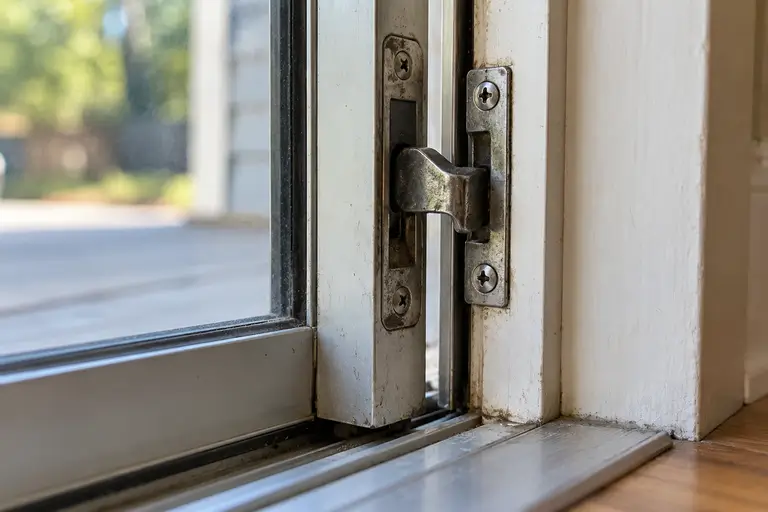
Most glass patio doors fail at one of five points: the latch, the track, the rollers, the frame fastening or the glass. A standard slider often relies on a single hook catching a keeper held by short screws. That makes the lock edge the usual target for a pry bar.
- Lock: one hook and one keeper, with little steel behind them.
- Track: a panel with clearance above it can be lifted off its rollers.
- Rollers: worn rollers let the panel sag, and the latch stops seating fully.
- Frame fastening: screws that stop in the jamb instead of the framing let the frame flex.
- Glass: laminated glass holds together when struck. Ordinary glass does not.
Denver homes see warm afternoons and cold nights. Over time that movement loosens frames and fasteners, so a door that locked tight on day one can develop play.
Which type of patio door is the most secure?
A hinged patio door or a lift-slide door with a multipoint lock is the hardest to force. On both, steel engages the frame at several points, and the panel cannot be lifted out. A standard slider with a single latch is the easiest to defeat.
Multi-slide and bifold doors fall in between, depending on their hardware.
| Door type | How it locks | Lift resistance | Weak point to check |
|---|---|---|---|
| Standard slider | Single hook latch | Low unless anti-lift blocks are fitted | Latch and keeper screws |
| Lift-slide | Multipoint, panel lowered onto track | High | Frame squareness at install |
| Multi-slide | Varies by system | Varies by system | Interlocks between panels |
| Bifold | Multipoint on lead panel, bolts on others | Moderate to high | Hinge and bolt adjustment |
| Hinged French | Multipoint or keyed deadbolt | High | Hinge screws and strike plate |
When you turn the handle on a lift-slide door system, it lowers the panel onto the track and compresses the seals, so there is nothing to lift. For glass at the front of the house, our guide to glass entry doors that balance style and security applies the same principles.
Which locks actually hold a sliding door shut?
A keyed multipoint lock is the most reliable lock for a sliding glass door, backed by a secondary lock at the foot or head of the panel. The thumb latch on many older sliders works as a privacy catch more than a security lock.
- Multipoint lock: hooks or bolts engage at the top, middle and bottom of the frame.
- Keyed mortise lock: replaces the thumb latch with a stronger hook and a cylinder.
- Foot lock or floor bolt: pins the panel to the sill so it cannot slide.
- Pin lock: a steel pin runs through both frames where the panels overlap.
- Security bar: a hinged bar that drops across the opening at mid-height.
⟦ IMAGE: chart-1 — which-locks-actually-hold-a-sliding-door-shut.svg — alt: “Explainer: Which locks actually hold a sliding door shut?” ⟧
Pair any lock with keeper screws long enough to reach the framing.
How do you secure the patio door you already have?
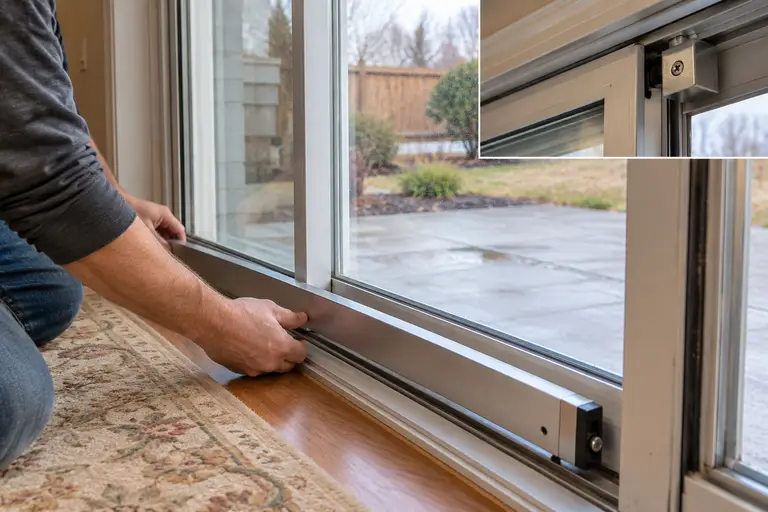
To secure an existing patio door, block the track, stop the panel from lifting, and reset the latch so it seats fully. Then add a secondary lock. These fixes run from cheapest to most involved:
- Lay a cut dowel or security bar in the lower track.
- Fit anti-lift blocks or screws in the upper track.
- Swap the keeper screws for longer screws that bite into the framing.
- Adjust or replace worn rollers so the panel sits level. Our guide on how to change the rollers on a sliding glass door walks through it.
- Add a pin lock or foot lock.
- Apply security film, or replace the glass unit with laminated glass.
- Add a contact sensor or glass-break sensor.
When does a new door make more sense than more hardware?
A new door makes more sense once the frame, track or glass is the problem, because add-on locks cannot fix a failing frame. Hardware only holds as well as what it screws into. Replacement is the better answer when:
- the frame is bent, racked or rotted at the sill
- the panel still lifts or rattles after you adjust the rollers
- the track is worn or cracked
- the insulated glass has failed and fogged
- the door has no upgrade path to a multipoint lock
At that point, professional glass door installation replaces the whole system. You get a new frame, a new track and new locking hardware, set correctly in the opening.
What drives the cost of a more secure patio door?
Several factors move the price of a more secure patio door:
- door type, since a lift-slide or multipoint system costs more than a basic slider
- panel size and panel count
- the glass package, since laminated glass adds cost
- hardware finish and keyed cylinders
- any changes to the rough opening or header
Our sliding glass door installation cost guide covers pricing for readers budgeting a replacement.
Why does installation matter as much as the door?
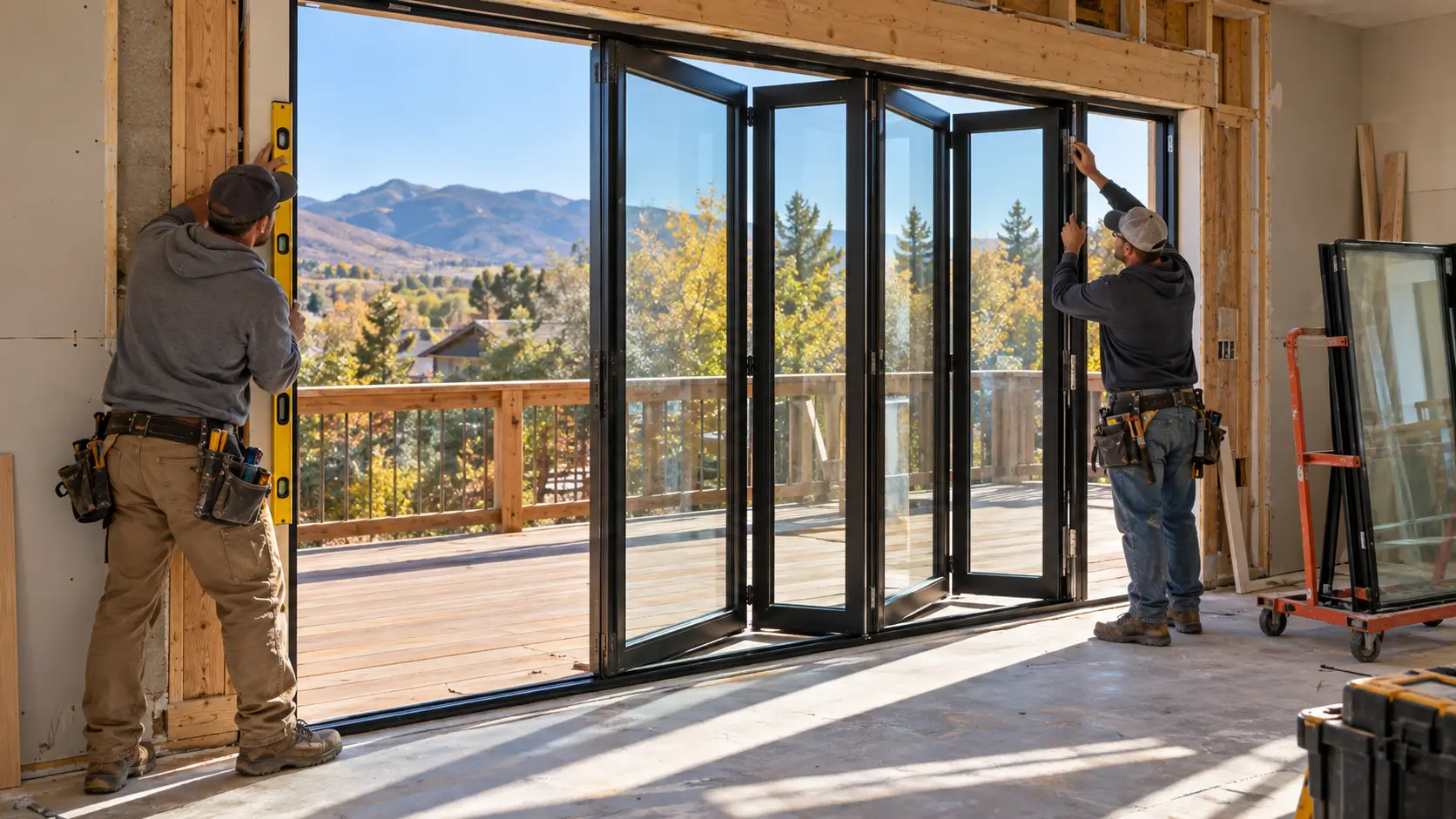
A secure door installed badly is still easy to force. When the frame is out of plumb or out of square, the multipoint bolts miss their keepers. If the frame is shimmed loosely at the lock side, a pry bar can spread it. If it is fastened only into trim, the whole unit can flex out of the opening.
Correct installation means:
- the frame set plumb, level and square
- solid shims at every lock and hinge point
- fasteners run through the frame into structural framing
- a sill pan and flashing so water never softens the sill
The Install Company holds license LCC202400321 and installs glass doors across the Front Range and mountain communities, from Denver, Boulder and Lakewood to Vail, Breckenridge and Steamboat Springs.
Call 720-764-6264 to talk through the door you have and the one that would serve your home better, or get in touch to plan your project.
Frequently Asked Questions
How can I make my sliding glass door burglar proof?
Start with a security bar in the lower track and anti-lift devices in the upper track to help prevent the sliding panel from being forced open or lifted out of its frame. Make sure the latch engages securely, and consider adding a secondary pin or foot lock. For additional protection, laminated glass, security film and door sensors can strengthen the overall patio door security system.
Are sliding patio doors easy to break into?
Older or poorly adjusted sliding patio doors can have security weaknesses, especially if the latch is loose, the frame flexes or the movable panel can be lifted from its track. Modern patio doors can include stronger frames, multipoint locking systems, laminated glass and anti-lift features that make forced entry more difficult.
Is it better to replace an old patio door or add security upgrades?
It depends on the condition of the existing door. A solid patio door that operates correctly may only need an upgraded lock, security bar or anti-lift protection. If the frame is damaged, the panel can be lifted from the track, the lock no longer aligns properly or the glass and hardware are outdated, replacing the patio door may provide better security than continuing to add aftermarket upgrades.