Key Takeaways
- For Colorado, the durability picks are engineered wood and fiber cement — both outperform vinyl against hail, sun, and freeze-thaw.
- Engineered wood has the best hail/impact resistance; fiber cement lasts longest (50+ years) and posts the top resale ROI; vinyl is cheapest (~$6.13/sq ft) but cracks in cold and hail.
- The “best for hail” pick and the “longest-lasting” pick aren’t the same material — fiber cement is durable but only medium for hail impact, while engineered wood absorbs impact best.
- Fiber cement siding recoups about 88% at resale and vinyl about 80% — among the highest ROI of any home project (JLC 2024 Cost vs. Value).
- Colorado ranked 6th in the U.S. for major hail events in 2025, so impact resistance isn’t optional here (Insurance Information Institute).
Choosing siding in Colorado is a durability decision as much as a design one. Between hail season, relentless high-altitude sun, and a freeze-thaw cycle that runs all winter, the wrong material can look tired — or cracked — within a few years. This guide compares the three materials most Front Range homeowners weigh: fiber cement, vinyl, and engineered wood — on cost, lifespan, hail resistance, and resale value, with 2026 numbers.
What’s the best siding for Colorado’s climate?
For most Colorado homes, engineered wood and fiber cement are the best choices — they resist hail and UV far better than vinyl, which cracks in cold snaps and hard impacts. Pick engineered wood if hail and impact resistance top your list, fiber cement if you want the longest lifespan and best resale value, and vinyl only if upfront budget is the deciding factor. Every material here has to survive three Colorado stressors: hail, intense sun, and freeze-thaw.
The stakes are real. Colorado ranked 6th in the nation for major hail events in 2025, with 244 hailstones one inch or larger recorded (Insurance Information Institute). Siding that shrugs off impacts and UV keeps your home protected — and cuts the odds of a storm-damage claim.
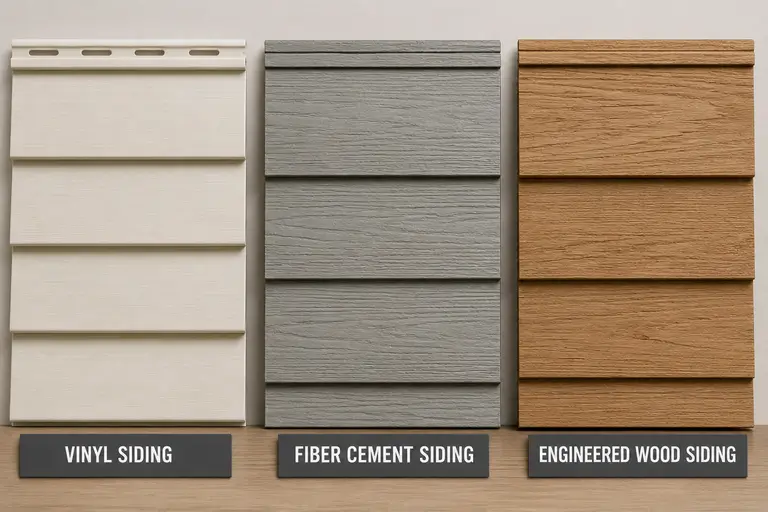
Fiber cement, vinyl, and engineered wood compared
On installed cost, vinyl is the cheapest at about $6.13 per square foot, fiber cement runs about $9, and engineered wood lands between $7 and $12 (This Old House; HomeGuide). Here’s how they line up per square foot installed:
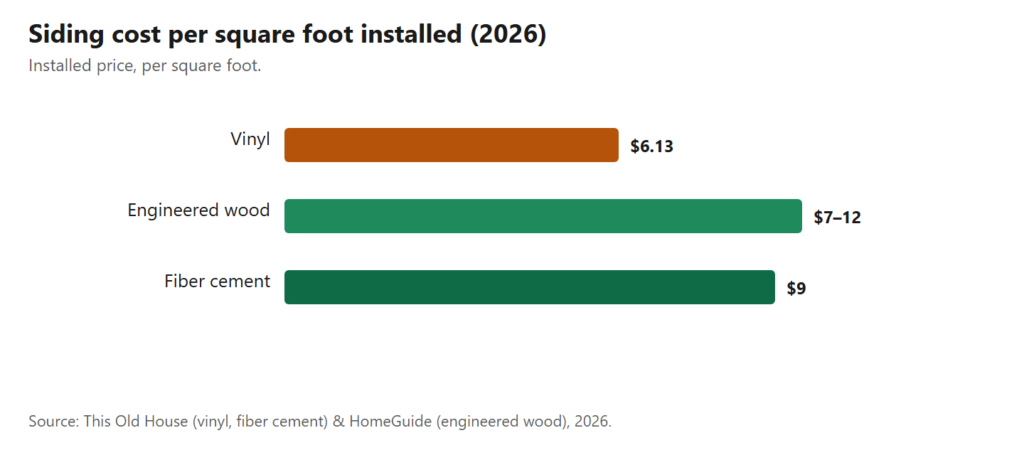
For a 2,000-square-foot home, a full vinyl re-side runs around $12,252 installed, with fiber cement and engineered wood costing more (This Old House). See our full siding replacement cost breakdown for Colorado for detailed project pricing.
Which siding holds up best to Colorado hail?
Engineered wood offers the best hail and impact resistance, fiber cement is durable but only medium against hard impacts, and vinyl is the weakest — it can crack or shatter, especially in cold weather. This is the nuance most comparisons miss: the longest-lasting material (fiber cement) isn’t automatically the best-for-hail material.
- Engineered wood — high impact resistance. Its composite structure absorbs blows and is far less likely to crack than natural wood or vinyl, which makes it a strong pick for hail-prone Front Range neighborhoods.
- Fiber cement — medium. It’s dense and long-lasting, but a fast-moving hailstone can chip or crack the surface, and repairs mean patching and repainting.
- Vinyl — low. Vinyl grows brittle in Colorado’s cold, so hail (and even a stray baseball) can crack or hole it.
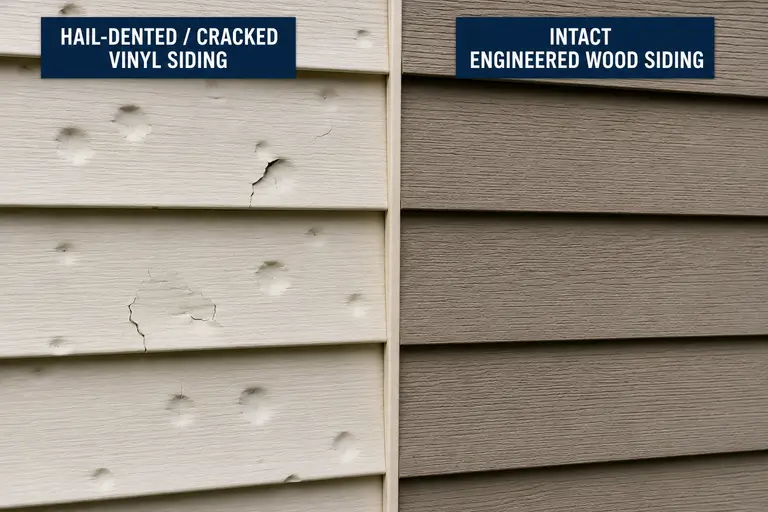
After a major storm, siding and roof damage often get addressed together — see our guide to hail damage siding and roof repair and what insurance covers.
How long does each siding last in Colorado?
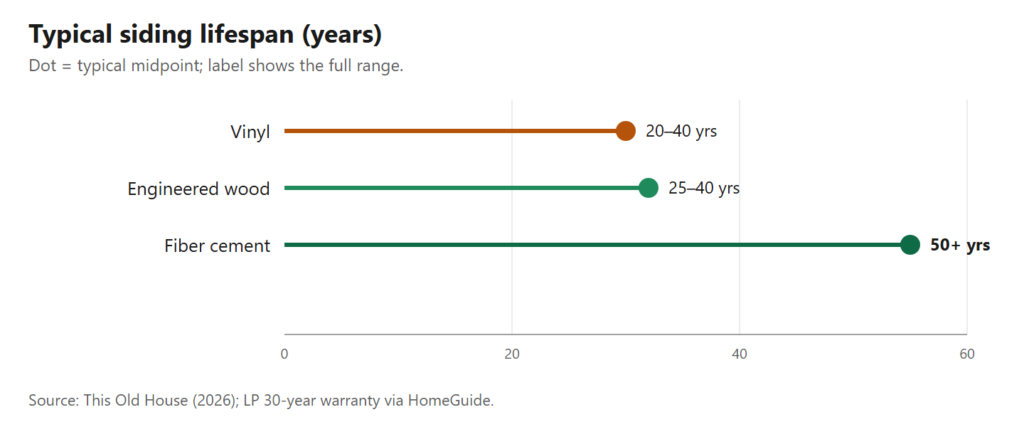
Fiber cement lasts the longest at 50+ years and vinyl runs 20–40 years (This Old House); engineered wood lands around 25–40 years, with LP backing its siding with a 30-year transferable warranty (HomeGuide). Colorado’s UV and freeze-thaw shorten the low end of every range, so finish quality and installation matter.
Cost and resale value
Siding replacement is one of the highest-return home projects: fiber cement recoups about 88% of its cost at resale and vinyl about 80%, per the JLC 2024 Cost vs. Value Report (JLC). Both beat many interior remodels. So while fiber cement costs more upfront than vinyl, its longer lifespan and strong resale recovery narrow the gap over time — and factor in avoided hail repairs on a more impact-resistant material.
Maintenance and appearance
Fiber cement and engineered wood take paint and mimic real wood grain convincingly; vinyl never needs painting but can fade and look less premium. Fiber cement holds color well and resists rot, insects, and fire. Engineered wood delivers a warm, real-wood look and takes repainting readily, though it needs its finish maintained to keep moisture out. Vinyl is the lowest-maintenance option day to day, but Colorado’s UV can fade darker colors over time.
Which siding should you choose?
Match the material to your top priority:
- Best for hail / impact resistance: Engineered wood.
- Longest lifespan + best resale: Fiber cement (50+ years, ~88% ROI).
- Lowest upfront cost: Vinyl (~$6.13/sq ft) — with the tradeoff of lower hail resistance.
- Best all-around for the Front Range: Fiber cement or engineered wood, depending on whether longevity or impact resistance matters more to you.
If you want a real-wood look on a deck or outdoor structure too, our composite vs. wood decks comparison applies the same durability-first logic to decking.
Frequently asked questions
What is the best siding for hail in Colorado?
Engineered wood offers the best hail and impact resistance because its composite structure absorbs blows without cracking. Fiber cement is durable but only medium against hard impacts, and vinyl is the weakest — it can crack, especially in cold weather.
Is fiber cement worth the extra cost over vinyl?
Often yes in Colorado. Fiber cement costs about $9 per square foot vs. vinyl’s ~$6.13, but it lasts 50+ years (vs. 20–40 for vinyl) and recoups about 88% at resale, per the JLC 2024 Cost vs. Value Report. Its longevity and durability can justify the premium.
Does engineered wood siding hold up in Colorado?
Yes. Engineered wood resists impact well, suits hail-prone areas, and typically lasts 25–40 years, with LP offering a 30-year transferable warranty. It does need its finish maintained to keep moisture out.
What siding lasts the longest?
Fiber cement lasts the longest of the common materials — 50+ years per This Old House — compared with 20–40 years for vinyl and roughly 25–40 for engineered wood.
What siding adds the most resale value?
Siding replacement is among the highest-ROI home projects. Fiber cement recoups about 88% and vinyl about 80% of cost at resale, according to the JLC 2024 Cost vs. Value Report.
The bottom line
For Colorado’s hail, sun, and freeze-thaw, engineered wood and fiber cement are the smart durability picks — engineered wood for the best impact resistance, fiber cement for the longest life and best resale. Vinyl saves money upfront but gives up hail resistance and lifespan. If you’d like help matching a material to your home and neighborhood exposure, The Install Company installs siding, soffit, fascia, and gutters across Denver and the Front Range.
Sources
- This Old House — Siding Replacement Cost (2026) — retrieved 2026-07-10
- HomeGuide — Siding Cost (2026) — retrieved 2026-07-10
- JLC — 2024 Cost vs. Value Report — retrieved 2026-07-10
- Insurance Information Institute — Facts + Statistics: Hail — retrieved 2026-07-10