Colorado’s Front Range punishes gutters in ways most of the country never sees: cottonwood fluff and pine needles in spring, hail in summer, falling leaves in autumn, and a freeze-thaw cycle all winter that turns trapped water into expanding ice. If you’re tired of climbing a ladder twice a year — or worse, paying someone $200 a visit to do it — gutter guards start to look appealing. But are they actually worth the money here? Below is the straight answer, real 2026 costs, and which type holds up to a Colorado climate.
Are gutter guards worth it for Colorado homes?
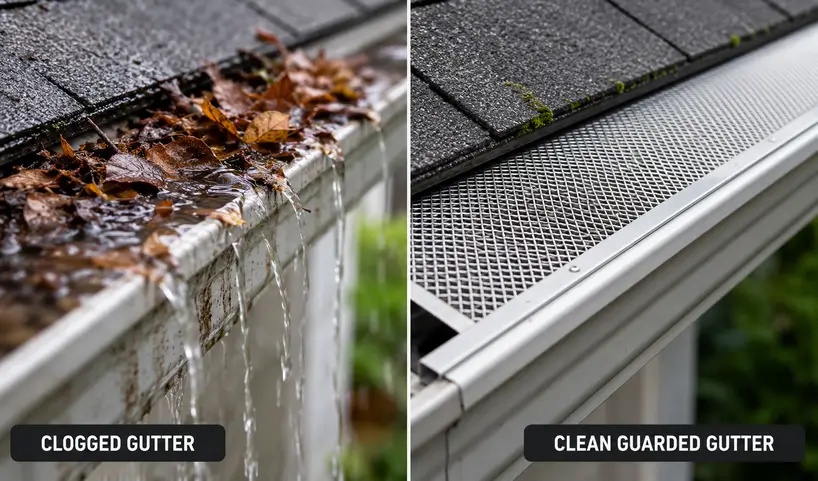
Yes — for most Colorado homes, quality gutter guards are worth it. They dramatically reduce how often you clean, keep water flowing toward downspouts during freeze-thaw cycles, and protect the fascia, soffit, and foundation from overflow damage. The catch is that cheap guards (foam and brush inserts) often make things worse under snow and ice, so the value depends entirely on choosing the right type for the climate.
The math is straightforward. Professional gutter cleaning runs $191 to $529 per visit, averaging about $360, and most homes here need it at least twice a year (This Old House, 2026). That’s a recurring cost forever. A one-time guard installation eliminates most of it. After guards go in, 30% of homeowners say they never clean their gutters again, and another 41% clean just once a year (This Old House, 2026).
How much do gutter guards cost in 2026?
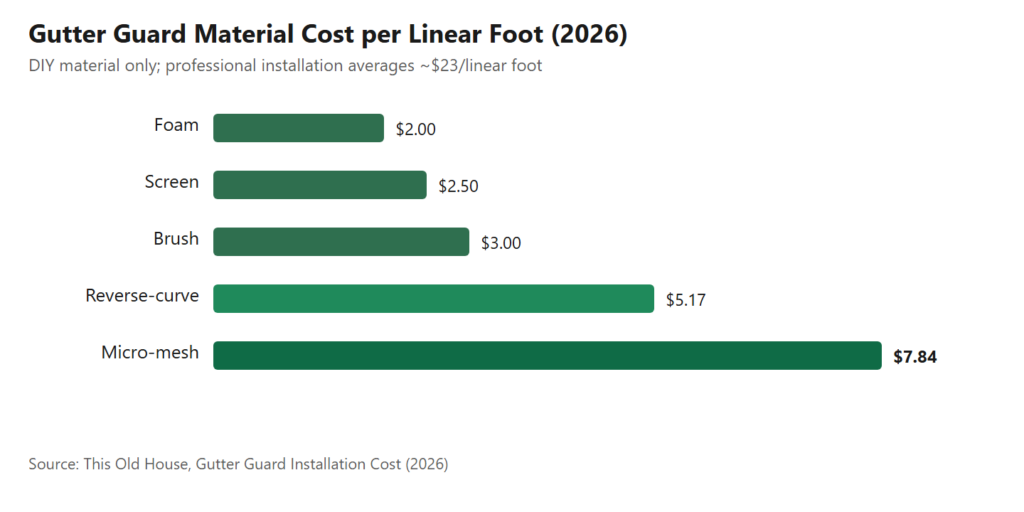
Gutter guards cost about $2 to $7.84 per linear foot for DIY materials and roughly $23 per linear foot professionally installed, according to This Old House. For a typical home with 200 linear feet of gutters, a professional installation averages $4,334 to $5,168 — about $4,617 for a mid-range system. Price swings come down to material type, roof height and pitch, and whether you DIY the install.
Here’s how the material cost breaks down by guard type:
A few notes on the spread:
- Micro-mesh is the priciest material but the most effective — about $7.84 per linear foot in materials, the top of the DIY range.
- Reverse-curve (surface-tension) guards run about $5.17 per linear foot in materials.
- Foam, screen, and brush inserts ($2–$3 per linear foot) are cheap and DIY-friendly, but they’re the weakest performers in snow country.
- Professional installation of any type averages $23 per linear foot — labor, roof height, and pitch drive most of that cost, not the guard material itself.
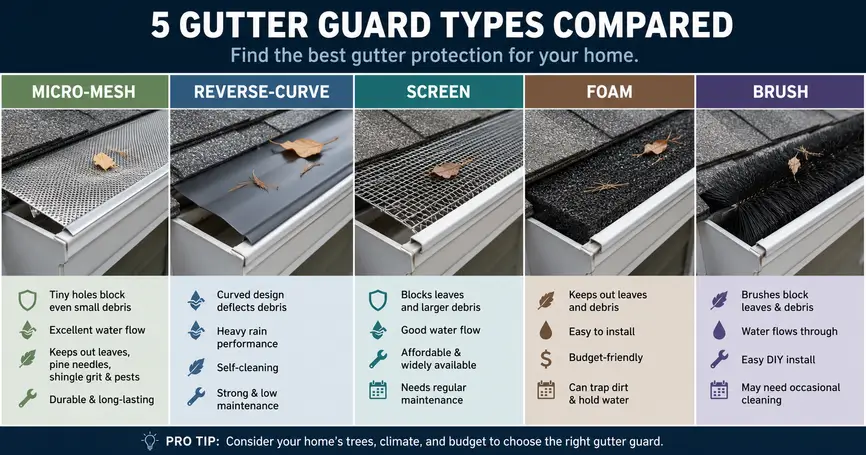
The 5 main types of gutter guards — and which suit Colorado
Not all guards handle a Colorado winter equally. Here’s how the five common types stack up for our climate.
Micro-mesh (best overall for Colorado)
A fine stainless-steel or aluminum mesh over a sturdy frame blocks everything down to shingle grit and pine needles while letting water through. It’s the top choice for the Front Range because it handles fine debris, sheds snow reasonably well, and resists corrosion. It’s the most expensive option, but also the longest-lasting.
Reverse-curve / surface-tension
These solid covers use water’s surface tension to pull rain into the gutter while debris slides off the edge. They perform well in heavy rain but can struggle in heavy snow, where ice can bridge the curve. Quality and install precision matter enormously.
Perforated metal screens
Rigid aluminum or steel panels with punched holes. A solid mid-tier option that keeps out leaves and larger debris, though fine material like pine needles can still slip through or sit on top.
Foam inserts (skip for snow)
Wedge-shaped foam that sits inside the gutter. Cheap and DIY-friendly, but it absorbs water, traps seeds, degrades under UV, and can hold moisture that freezes — a poor match for Colorado winters.
Brush guards (skip for snow)
Bottle-brush-style inserts that catch debris on the bristles. Easy to install, but they collect pine needles and become a frozen mess in snow and ice. Best avoided here.
Why Colorado’s climate is harder on gutters
Gutter performance is a local question, and Colorado stacks several stressors that milder states never face at once:
- Hail. Colorado ranked 6th in the nation for major hail events in 2025, with 244 recorded hailstones one inch or larger (Insurance Information Institute). Hail dents gutters, dislodges shingle granules that clog them, and can crush flimsy guards.
- Freeze-thaw cycles. Water that pools in a clogged gutter freezes overnight, expands, thaws by afternoon, and refreezes — sometimes dozens of times each winter. That cycle pries gutters loose and forces water behind the fascia.
- Mixed debris. Pine needles, cottonwood fluff, aspen leaves, and shingle grit are all fine enough to defeat coarse screens, which is why micro-mesh wins here.
The downstream cost of getting this wrong is real. Nationally, water damage and freezing is the second-most-common homeowners insurance claim, hitting about 1.5% of insured homes every year with an average payout of $15,400 (Insurance Information Institute, 2019–2023). Overflowing gutters that dump water against the foundation are a direct contributor.
Gutter guards vs. twice-yearly cleaning: the 10-year math
The strongest argument for guards isn’t convenience — it’s the recurring cost they erase. Cleaning is a bill that never stops; guards are mostly a one-time spend. Here’s how the cumulative cost compares over a decade, assuming two professional cleanings a year at roughly $200 each:
The takeaway: a DIY micro-mesh system typically pays for itself in about four years of avoided cleanings, and even a premium professional install breaks even within the lifespan of the guards. Factor in the avoided risk of a single overflow-related repair, and the case gets stronger.
Do gutter guards prevent ice dams?
Not on their own — but the right guards help. By keeping gutters clear, quality guards let melting snow drain to the downspouts instead of pooling and refreezing. That reduces one ice-dam trigger. However, ice dams form mainly because heat escaping through the roof melts snow that then refreezes at the cold eave. Attic insulation and ventilation are the real fix, and poorly designed or poorly installed guards can even trap ice. The lesson: treat guards as part of a system, not a standalone ice-dam cure.
Pro tip: If ice dams are a recurring problem, pair micro-mesh guards with proper attic ventilation and, in severe cases, heated gutter cable. A good installer will assess the whole roof edge, not just sell you a guard.
What to look for in a Colorado gutter guard
Use this checklist when comparing systems:
- Stainless-steel micro-mesh rather than plastic or foam, for fine-debris and freeze resistance.
- A rigid, powder-coated frame that won’t warp under snow load.
- Professional installation that doesn’t void your roof warranty — some attachment methods lift shingles.
- A written warranty covering both clogging and material failure.
- A local installer who understands Front Range weather, hail exposure, and the specific trees on your lot.
For homes that have already taken storm damage, it often makes sense to address gutters and guards alongside roofing and siding repairs at the same time — see our guide to hail damage siding and roof repair and what insurance covers. Guards are also a natural add-on when you upgrade your siding, soffit, fascia, and gutters as one weatherproofing package.
Frequently asked questions
How much do gutter guards cost in Colorado?
Expect about $2 to $7.84 per linear foot for DIY materials and roughly $23 per linear foot professionally installed, or about $4,334 to $5,168 for a typical 200-foot home (This Old House, 2026). Micro-mesh sits at the top of that range; foam and brush at the bottom.
What’s the best gutter guard for snow and ice?
Stainless-steel micro-mesh on a rigid frame is the best fit for Colorado snow. It sheds fine debris, resists corrosion through freeze-thaw cycles, and holds up better than foam or brush inserts, which trap moisture and ice.
Do gutter guards stop me from ever cleaning gutters again?
Mostly, but not entirely. After installing guards, 30% of homeowners report never cleaning again and 41% clean just once a year (This Old House, 2026). Micro-mesh tops can still collect fine grit that needs an occasional brush-off.
Are gutter guards worth it on a Colorado home?
For most homes, yes — they erase most of the recurring cost of twice-yearly cleaning ($191–$529 per visit) and protect against overflow during freeze-thaw winters. The value hinges on choosing micro-mesh over cheap foam or brush guards.
Will gutter guards prevent ice dams?
They help but don’t guarantee it. Guards keep water moving toward downspouts, but ice dams are primarily caused by attic heat loss. Pair guards with insulation and ventilation for real protection.
The bottom line
For a Colorado home dealing with hail, pine needles, and a long freeze-thaw winter, quality micro-mesh gutter guards are usually worth it — they end the twice-a-year cleaning grind and protect the fascia, soffit, and foundation from overflow. The mistake to avoid is buying cheap foam or brush inserts that fail under ice. If you’d rather have an expert assess your roofline, debris exposure, and the right system for your home, The Install Company installs gutter protection alongside siding, soffit, and fascia work across Denver and the Front Range.
Sources
- This Old House — Gutter Guard Installation Cost (2026) — retrieved 2026-06-30
- This Old House — Gutter Cleaning Cost (2026) — retrieved 2026-06-30
- Insurance Information Institute — Facts + Statistics: Hail — retrieved 2026-06-30
- Insurance Information Institute — Facts + Statistics: Homeowners and Renters Insurance — retrieved 2026-06-30