Changing sliding glass door rollers means lifting the moving panel off its track, fitting matched new wheels and setting it back so it rolls level. Mark Palitto, owner of The Install Company in Denver, wrote this for homeowners whose patio door has started to fight them. It follows the job through to the final test run and marks where it stops being a weekend project.
Key Takeaways
- Vacuum and inspect the track before ordering parts, because a dented or gritty channel makes a door drag just like worn wheels do.
- Never lift the panel out alone: have a helper and a padded spot to lean it ready before the first screw turns.
- Seat a stubborn roller housing without a hammer, since a bent bottom rail can turn a cheap parts swap into pricing a new door.
Signs Your Sliding Door Rollers Need Replacement
Worn rollers show up as a door that drags, scrapes or rides low in its frame. A dirty or dented track causes the same symptoms, so rule it out before buying parts.
Signs Your Sliding Door Rollers Are Worn Out (and When It’s the Track Instead)
Roller wear looks like this:
- Grinding along the whole run: a worn wheel or bearing makes noise for the full length of the slide.
- A panel sitting low: the bottom rail rubs the sill or the latch misses its keeper, and turning the adjustment screws no longer raises it.
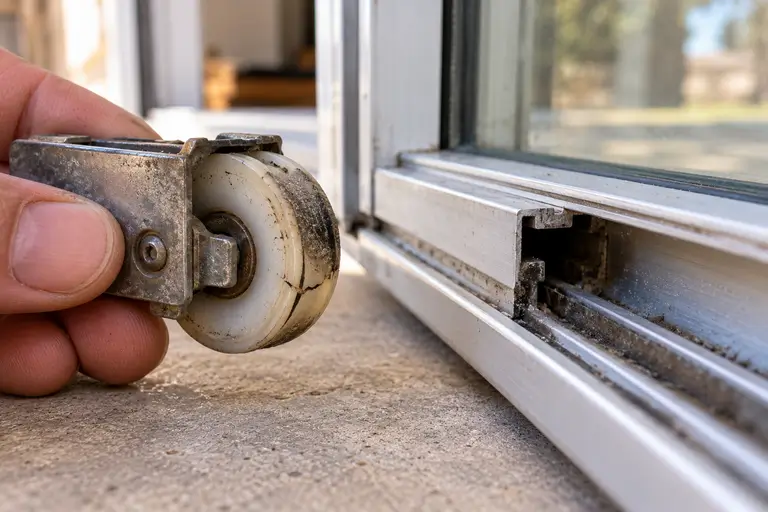
- Damaged wheels: a flashlight aimed under the bottom rail shows flat spots or cracks.
A door that hitches at one spot points to the track instead. Packed grit or a bent rail lip catches the wheels there only. Vacuum the channel and try again. If it still grinds end to end, replace the rollers yourself with the steps below or hand the job to our sliding glass door repair service.
Tools and Materials You’ll Need for the Roller Swap
Set out the necessary tools before the panel comes off, so the door is never left leaning while you hunt for parts. The swap needs:
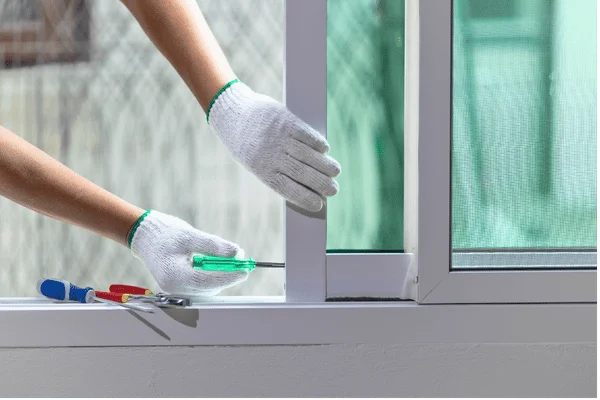
- Screwdriver: turns the adjustment screws and backs out the screws holding each roller housing.
- Putty knife: pries a seized roller out of the bottom rail without gouging it.
- Replacement rollers: matched to the old ones, so pull one before ordering.
- Tape measure: checks wheel diameter and housing length against the new part.
- Vacuum: clears grit from the track and bottom rail before the new rollers go in.
What Safety Precautions Matter Before You Lift Out the Panel?
The panel is the hazard: glass in its frame is heavy and hard to hold once it tips. Before lifting:

Lift-slide doors and other oversized panels are heavy enough that professional service makes more sense.
Step-by-Step Guide to Replacing Sliding Door Rollers
Changing the rollers means taking the moving panel out of its frame to swap the wheel housings in its bottom rail. The fixed panel stays put.
Step 1: Remove the Sliding Door Panel
Release the lock and slide the door to mid-opening. Small holes at each end of the bottom rail hide the adjustment screws; turn both until the rollers retract and the panel drops. With your helper on the far edge, lift the panel into the head channel and swing the bottom toward you to clear the track.
Step 2: Locate and Remove Old Rollers
Each roller sits in a housing pressed into the end of the bottom rail. Back out the screws holding it, then work the housing free with the putty knife. Note which way each wheel faced so the new ones go in the same way.
Step 3: Clean the Track and Frame Area
Vacuum the channel and wipe the rail the wheels ride on, then feel along it for dents or flattened spots. A new wheel rolling over a damaged rail wears out the same way the old one did.
HomeGuide’s sliding door repair cost guide counts a warped, rotted or severely damaged frame among the signs that replacing the door makes more sense than repairing it. With a frame like that, a new glass door installation is the job to plan.
Step 4: Install New Rollers
Push each new housing into its pocket, wheel facing down, and drive the screws back in snug. Spin each wheel by hand; it should turn freely without wobble. Leave both adjustment screws turned so the wheels stay retracted into the rail and the panel sits lowered, which gives you room to clear the track.
Step 5: Reinstall the Sliding Door
Tip the top of the panel up into the head channel, then swing the bottom in until the wheels rest on the rail. Turn the adjustment screws to raise the panel off the sill, an even amount on each side. A panel that does not seat fully in the top channel leaves gaps that let cold air in around a sliding door.
Testing and Adjusting Your Door
Run the door through its full travel several times before you call the job done. It should roll with light, steady pressure and stop without bouncing. Next, close it and look at the gap along the latch-side jamb. A gap that is wider at the top or the bottom means the panel is tilted, so turn only the screw on the low end, a little at a time, and test again. Finish with the lock: the latch should catch its keeper without you lifting or pushing the handle.
How Can You Make Sliding Door Rollers Last Longer?
Rollers last longest when grit stays out of the track and the panel’s weight rides on the wheels instead of the bottom rail dragging. A short routine keeps both true:
- Clear the track on a schedule: vacuum the channel whenever you clean the floor beside it. Sand ground between wheel and rail is what flattens the wheels.
- Lubricate lightly with silicone: mist a dry silicone spray on the wheels and the rail, then wipe off the excess so it does not collect dust.
- Watch the ride height: once the door starts brushing the sill, turn the adjustment screws up before the rail wears.
- Close it gently: a panel slammed into the jamb jolts the wheels and their housings.
What Mistakes Damage New Rollers or the Door Itself?
The damage to avoid comes from force put where the hardware cannot take it. A bent rail or frame can turn a parts swap into the sliding glass door installation cost of a new door.
| Mistake | What it damages |
|---|---|
| Hammering a housing into the bottom rail | Bends the rail lip so the new wheel sits crooked |
| Prying the panel out against the jamb | Chips the glass edge or dents the frame |
| Sliding the door before extending the wheels to lift the panel off the sill | Drags the bottom rail across the sill |
Doing It Yourself Vs. Calling a Professional
With a helper, you can swap the rollers on a standard panel yourself. Two things move the job to a professional. One is a housing that will not come free of the bottom rail: forcing it bends the pocket the new roller has to sit in. The other is alignment that never settles, where the latch still misses its keeper after repeated passes at the adjustment screws. That points to a frame or track out of square, a problem new wheels do not fix.
How to Tell Which Rollers Your Sliding Door Takes
Which rollers fit depends on the door’s maker and the shape of the old housing. Look for a brand name on a sticker or stamp along the frame edge, or etched into a corner of the glass. Then hold the old housing against the replacement and match these points:
- Wheel count: one wheel, or tandem wheels sharing a housing.
- Wheel profile: a grooved wheel rides a rounded rail, and a flat wheel rides a flat rail.
- Mounting: the screw holes and adjustment screw line up with those in the bottom rail.
What Drives the Cost of Roller Replacement
The price depends on which rollers your door takes and the condition of the rail they ride on. Rollers for a current door model are easier to source. Rollers for an older or discontinued model may have to be ordered or adapted to fit. A dented or worn rail turns a parts swap into track repair as well. When you ask for a quote, ask whether it covers the rollers and any track work, or only the labor of the swap.
Sliding Door Rollers Replacement
With the panel back on its rail, what you noticed while it was out decides your next step. A door that rolls quietly on its new wheels needs nothing more than a clean track from here on. If the rail, the frame or the final fit gave you trouble, that calls for someone standing at the door with you. The Install Company is based in Denver and works on sliding glass doors in towns from Greeley down to Castle Rock. To have us take a look at yours, send us a message or call 720-764-6264.
FAQs: Roller Replacement for Sliding Doors
How long do sliding door rollers last?
Sliding door rollers have no set lifespan. They last until the wheels or bearings wear through. A heavy panel riding on plastic wheels without sealed bearings wears them out sooner than a light panel on steel wheels.
Can I use universal rollers for any patio door?
No. Universal rollers may fit many sliding doors, but compatibility isn’t guaranteed. One can fit the pocket in the bottom rail yet hold the wheel at a different height, leaving the adjustment screw too little travel to level the panel.
Is WD-40 suitable for sliding door tracks?
No, not as the lubricant you leave on the track. WD-40 leaves an oily film that holds the grit you vacuum out, and the wheels grind that paste into the rail. Wipe the rail clean before switching to silicone.
Do I need to replace both rollers if only one is damaged?
Yes, replace both rollers on the panel together. A new wheel beside a worn one holds that end higher. The panel tilts, and the adjustment screws end up set unevenly to compensate, which wears the new wheel faster.
Sources
- How Much Does Sliding Glass Door Repair Cost? (2026), HomeGuide, retrieved 2026-10-07.