Hail Damage Siding and Roof Repair in Denver: What Insurance Covers
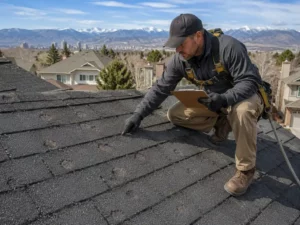
The May 30, 2024 Denver hailstorm caused an estimated $1.9 to $3.0 billion in damage. That made it Colorado’s second costliest hail event in recorded history, per NOAA’s National Centers for Environmental Information. If your home was in the path of that storm or any Front Range hailstorm since, you’re likely looking at damaged shingles, dented siding, or both — and wondering what your insurance will actually pay. Most homeowners don’t know where to start. Do you call your insurer first? Get a contractor out? What will you owe out of pocket? This guide answers all of it: what Colorado homeowners insurance covers for hail damage siding repair in Denver and roof claims, how your deductible works, and the exact steps to file a claim and get paid fairly. We handle both siding repair in Denver and roofing — which means we see this process from both sides, every storm season. Key Takeaways Why Does Denver Have One of the Worst Hail Problems in the Country? In the three years from 2016 to 2018, Colorado ranked second nationally for hail loss claims, with Denver alone filing 48,357 claims during that period, according to the National Insurance Crime Bureau’s analysis published by the Insurance Information Institute. That’s not a fluke. Denver sits in one of the most persistently hail-active corridors in North America. HailScore.com, citing NOAA NEXRAD radar data from 2015 to 2025, recorded 5,268 hail events within a 15-mile radius of Denver over that 10-year span. That works out to roughly 527 hail events per year near the city — and many of those events produce stones large enough to damage roofing and siding materials. The Front Range hail season runs from April 15 through September 15, according to NOAA and COHailClaims.com. The peak danger window is late May through late June, with June consistently the highest-frequency month statewide. So if you’ve been through a Denver spring, you already know the pattern: clear morning, building clouds by noon, and hail by 3 p.m. The trend is getting worse. NWS Denver recorded 34 baseball-sized hail events in 2023 — nearly three times the 12 recorded in 2019. Bigger stones mean more damage per event, and more roof and siding replacements per storm season. Your wallet feels it beyond the repair costs. As of February 2026, the Colorado Division of Insurance reported that hail is the number one driver of Colorado homeowners insurance premium increases, which have risen approximately 100% since 2018. Hail accounts for 26–54% of homeowners insurance premium costs along the Front Range, according to the same Colorado DORA reporting. X-axis: Jan–Dec | Y-axis: Relative frequency index 0–100 | Peak months: May (75) and Jun (100) highlighted in orange | Source: NOAA Storm Events Database / COHailClaims.com Denver is one of the most hail-active metro areas in the country. Between 2016 and 2018, the city recorded 48,357 hail insurance claims — and Colorado ranked second nationally by total hail losses, per the National Insurance Crime Bureau (Insurance Information Institute, 2024). Hail season runs April through September, with the peak danger window from late May through late June. Does Colorado Homeowners Insurance Actually Cover Hail Damage? Yes — standard HO-3 homeowners insurance policies cover sudden hail damage to roofs and siding as a named covered peril. In 2023, wind and hail together accounted for 34–41% of all U.S. homeowners insurance property damage claims, according to the Insurance Information Institute’s Facts + Statistics report. That makes hail one of the most common triggers for a claim in the country. So what does your policy actually cover? Standard coverage includes sudden hail damage to your roof surface and shingles, gutters, siding panels, windows, and exterior HVAC units. If a hailstorm hits and damages those surfaces, your insurer is generally on the hook. What’s NOT covered is just as important to understand. Pre-existing wear and tear doesn’t qualify. Some policies include cosmetic-only damage exclusions. And damage older than your policy’s filing window — typically one to two years in Colorado — can be denied. ACV vs. RCV: the difference that costs thousands Here’s where most homeowners get surprised. Not all policies pay the same way, even for covered damage. ACV (Actual Cash Value) means your insurer pays what your roof or siding is worth today, after depreciation. Not what it costs to replace. On a 15-year-old roof, that number shrinks fast. RCV (Replacement Cost Value) means your insurer pays the full cost to replace with like materials. The difference on a 15-year-old roof can be $4,000–$8,000, per industry standard depreciation schedules. That’s real money, and it comes directly out of your pocket if you have ACV coverage. In 2024, State Farm alone paid $521 million in Colorado hail damage claims, ranking the state fourth nationally (Western Slope Now, citing State Farm data, 2024). Insurers are paying. The question is how much they pay you specifically. One more Colorado-specific item: the state does not require insurers to match undamaged siding. Only sections that were actually damaged must be replaced. If hail hit one wall of your house, you may end up with mismatched panels — unless your policy includes a matching endorsement or you negotiate otherwise. [PERSONAL EXPERIENCE] When our crews inspect a home after a major Denver hailstorm, one of the first things we check is the policy type. An ACV policy on a 15-year-old roof can leave a homeowner with $6,000–$8,000 less than they expected. It’s worth a 10-minute call to your agent before you file — just to know which kind of policy you’re working with. For a full overview of your material options, see our siding repair Denver service page covering fiber cement, LP SmartSide, and vinyl. Standard Colorado homeowners insurance (HO-3) covers sudden hail damage to roofs and siding. However, ACV (Actual Cash Value) policies deduct depreciation from payouts — on a 15-year-old roof with a $20,000 replacement cost, that can mean receiving $10,000–$12,000 instead of the full amount. RCV policies pay the full replacement cost, making them significantly … Continue reading Hail Damage Siding and Roof Repair in Denver: What Insurance Covers
